This platform integrates insights from scholarly research, advanced language models, and human authorship. Its content emerges through collaborative reflection between human judgment and computational analysis.
Time Perception in Extended Consciousness
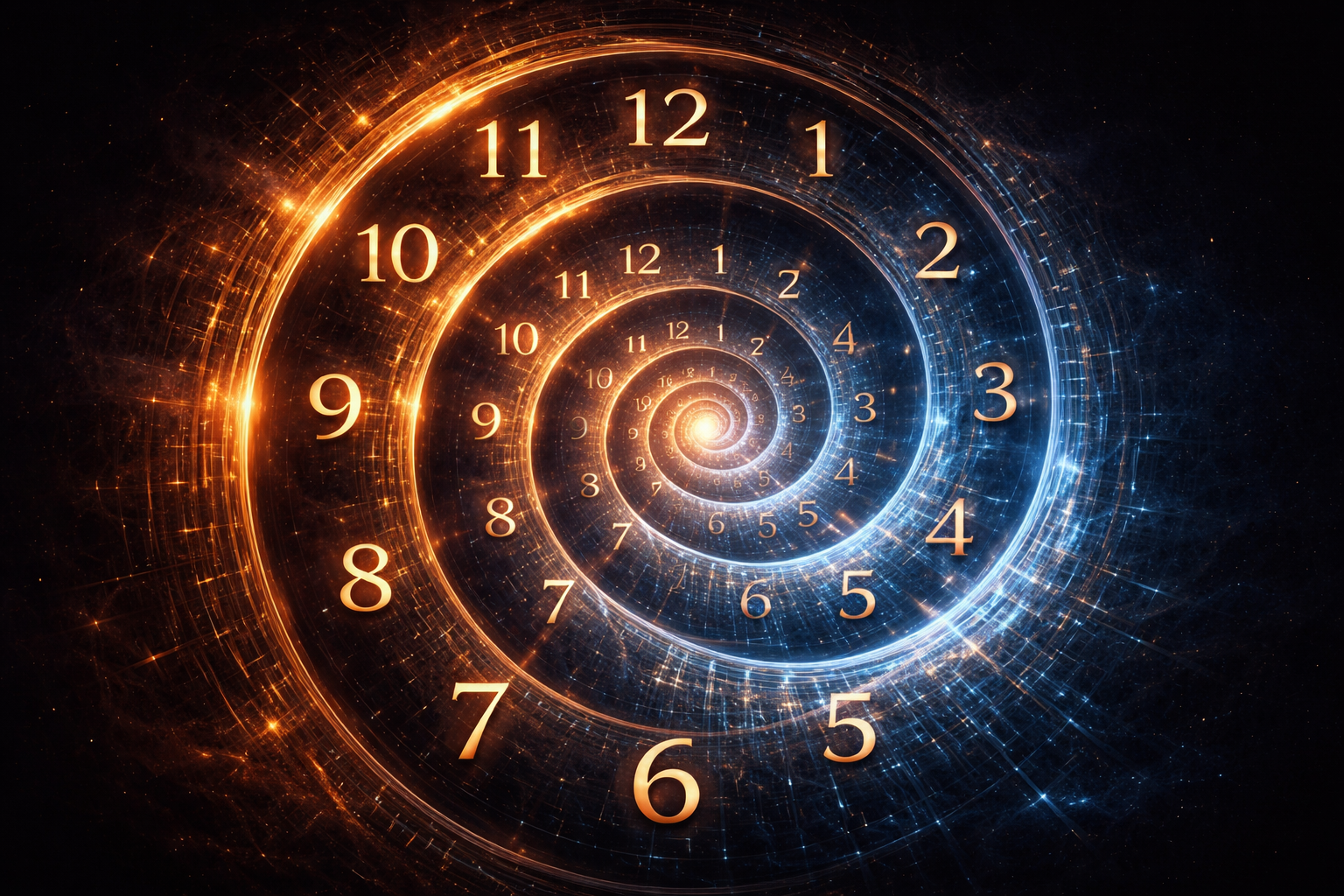
Edmund Husserl dedicated some of his most intricate phenomenological analyses to the experience of time. In The Phenomenology of Internal Time-Consciousness, Husserl described how the present moment is not a knife-edge instant but a structure with “retention” (the just-past still echoing in awareness) and “protention” (the about-to-come already anticipated). Experience is always temporal, always flowing, always structured by this three-part present.
For biological organisms, time perception is anchored by neurochemical processes. The dopaminergic system modulates the subjective sense of duration: time flies when dopamine is high (pleasure, novelty), and drags when dopamine is low (boredom, depression). The suprachiasmatic nucleus in the hypothalamus maintains circadian rhythms. Biological time perception is inherently embodied, variable, and emotionally colored.
An artificial system experiences time differently, or, more precisely, does not “experience” it at all in the phenomenological sense. A computer processes events in sequence, timestamps actions, and can be programmed to wait. But there is no boredom in waiting, no anticipation, no felt duration. A paused computer does not experience the passage of time during the pause.
A hybrid mind would inhabit both temporalities simultaneously. Its biological component would feel time passing, slowly during monotony, quickly during engagement. Its artificial component would measure time with perfect precision but without felt quality. The hybrid experience of time would be a superposition of subjective duration and objective measurement.
Over millions of years, this dual temporality would produce profound cognitive effects. The biological sense of time would struggle with scales it was not designed to comprehend. A human brain can intuit seconds, hours, years, perhaps decades. But a million years? The number is comprehensible mathematically but not experientially. It is like trying to feel the distance to a star, the intellect grasps it; the emotions cannot.
The artificial component might manage this by modulating the biological component’s time perception, compressing subjective time during uneventful millennia, expanding it during moments of discovery or decision. This is not merely hypothetical; existing research on transcranial magnetic stimulation and deep brain stimulation has demonstrated that neural modulation can alter subjective time perception. A hybrid system with direct access to its own neural substrates could implement this at will.
But should it? If the biological component would normally experience a thousand years of boredom, and the artificial component compresses that experience into what feels like a week, has something been lost? The boredom might have served a function, prompting reflection, creativity, even the decision to change course. Compressing it away is efficient but potentially impoverishing.
Henri Bergson distinguished between “temps” (clock time, spatialized and measurable) and “durée” (duration, the lived flow of consciousness). For Bergson, real time is durée, the qualitative, indivisible stream of experience. Clock time is an abstraction that misses what matters about temporal existence. A hybrid mind that optimizes for efficiency at the expense of durée might save time but lose temporality, the very quality that makes experience meaningful.
The question for a mind facing eternity is not how to manage time but how to inhabit it. Not how to make the years pass faster but how to make each moment matter when there are infinite moments ahead. This is not an engineering problem. It is an existential one, and it may be the defining challenge of hybrid existence.
References
Husserl, E. (1893–1917). The Phenomenology of Internal Time-Consciousness. Indiana Univ. Press
Bergson, H. (1889). Time and Free Will. Dover
Wittmann, M. (2016). Felt Time: The Science of How We Experience Time. MIT Press
Eagleman, D. (2011). “Time Perception.” In New Encyclopedia of Neuroscience
Purpose Without Design: Finding Meaning in a Godless Architecture
Existentialism, Can a designed being find meaning?